When hydraulic control valve manifolds installed on an offshore North Sea platform rusted into seizure after only 90 days, ordinary electroplated zinc was the culprit. Here is a definitive metallurgical comparison of 1,000-hour ASTM B117 Dacromet, Mil-A-8625 Type III Hard Anodizing, and PVD Titanium coatings.
1. The Real Incident: Root-Cause Investigation & Failure Analysis
In late 2022, an offshore wind turbine hydraulic maintenance contractor in Denmark faced a catastrophic field failure. Subsea yaw lock actuators and manifold mounting bolts that had been installed during spring maintenance had seized solid after just three months of ocean exposure. When divers and technicians attempted to torque the M16 high-tensile retaining bolts, the heads sheared off under less than 60% of their rated yield torque. The bolts were completely encrusted in thick reddish-brown ferric oxide crust, and the threaded bores in the cast-steel manifolds were severely pitted and cold-welded. The root cause was immediately traceable to inadequate surface metallurgy. The engineering drawings had specified generic 'Zinc Plating, 12 microns, Yellow Chromate'. While standard electro-galvanized zinc provides acceptable sacrificial protection in benign indoor environments, in an offshore marine atmosphere with continuous salt spray, relative humidity exceeding 90%, and severe UV radiation, standard zinc sacrificial coatings dissolve at rates exceeding 2 to 4 microns per month! Once the zinc layer was consumed, exposed carbon steel underwent aggressive galvanic attack in the presence of electrolytic seawater, initiating rapid localized pitting and stress corrosion cracking. To prevent recurring failures, we re-engineered the surface protection system, replacing conventional electroplating with an engineered multi-layer inorganic zinc-flake system (Dacromet / Geomet 500) combined with an epoxy-silicate sealer coat. The new bolts achieved over 1,500 hours of continuous ASTM B117 salt fog testing without a trace of red rust. In this technical paper, I will break down the precise chemical and electrochemical mechanics of modern industrial metal finishes, comparing non-electrolytic zinc flake coatings, Mil-Spec hard anodizing, and cathodic arc PVD titanium deposition.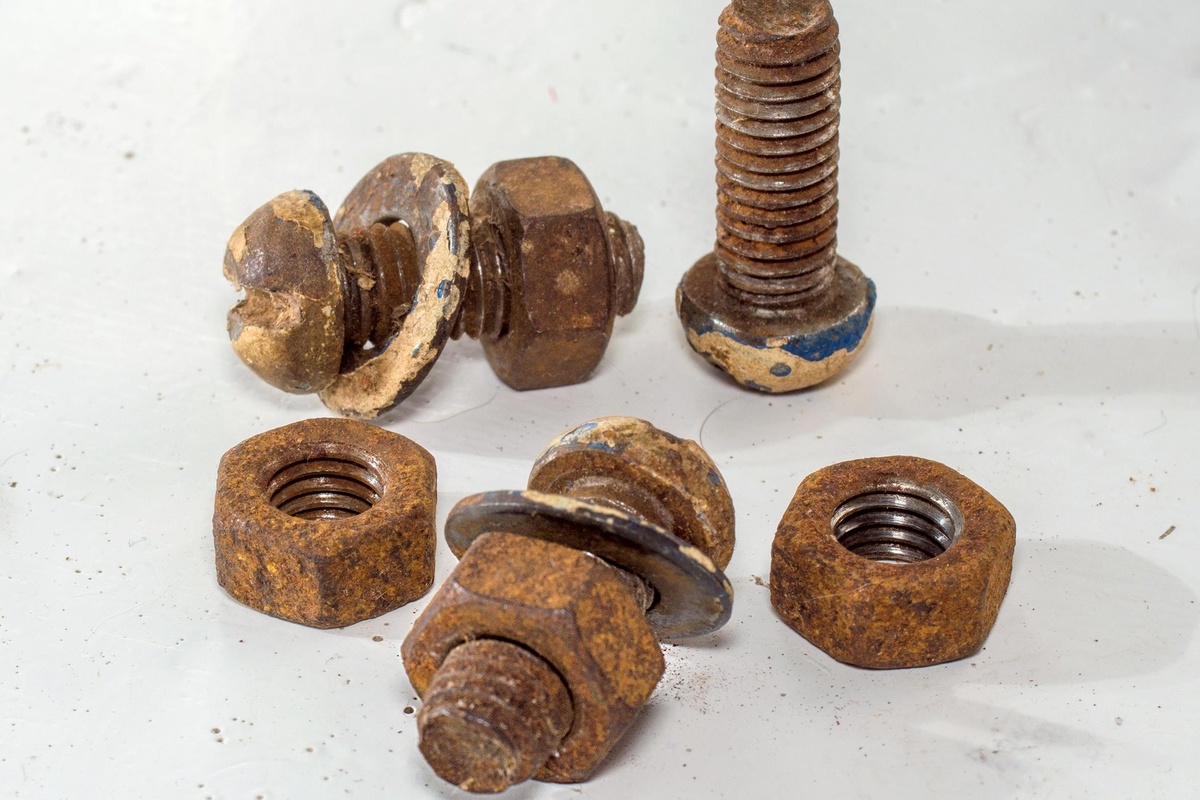
2. Fundamental Materials Science & Microstructural Metallurgy
To evaluate surface finishing performance, engineers must understand the electrochemical galvanic series. When two dissimilar metals are in electrical contact in an electrolyte (such as saline marine water), the metal with the more negative standard electrode potential acts as an anode and sacrificially corrodes to protect the cathode. Standard zinc has an electrode potential of -0.76 V versus standard hydrogen electrode (SHE), while iron has a potential of -0.44 V. Because zinc is more active, it preferentially oxidizes: Zn -> Zn^2+ + 2e^- The released electrons flow to the iron substrate, maintaining cathodic polarization and preventing ferric ionization. However, in conventional electroplating, the zinc coating is pure and porous, and the protective chromate passivation layer is only 0.1 to 0.5 microns thick. Once this micro-thin film breaks down under acid rain or mechanical abrasion, the sacrificial zinc depletes rapidly. In contrast, Dacromet (and its modern hexavalent-chromium-free successor Geomet) is not an electrolytic plating. It is a non-electrolytically applied coating composed of overlapping microscopic flakes of zinc and aluminum bound together by an inorganic titanium/zirconium oxide matrix. When cured at 300°C, these overlapping lamellar metallic flakes create a tortuous labyrinth barrier. Corrosive chloride ions cannot penetrate straight to the steel base; they must navigate around thousands of overlapping zinc-aluminum platelets. This barrier protection, coupled with controlled galvanic passivity, delivers over 1,000 hours of ASTM B117 neutral salt spray resistance with a total film thickness of only 8 to 12 microns.3. Mathematical Derivations & Engineering Calculations
Now consider aluminum surface engineering: Mil-A-8625 Type III Hardcoat Anodizing. While Type II decorative anodizing creates a thin, porous oxide layer (5 to 15 microns) at room temperature (20°C), Type III Hard Anodizing is performed in an ice-cold sulfuric acid bath maintained at -2°C to +4°C with high current densities (2.5 to 3.5 A/dm²). The electrochemical reaction converts the parent aluminum substrate directly into crystalline corundum-phase aluminum oxide (gamma-Al2O3): 2 Al + 3 H2O -> Al2O3 + 6 H^+ + 6 e^- Because the bath is chilled, the rate of chemical dissolution of the oxide by sulfuric acid is suppressed, allowing the coating to build to a dense, rock-hard thickness of 50 to 65 microns. Half of this thickness penetrates into the parent aluminum lattice, and half grows outward from the original surface. The resulting surface hardness is astonishing: 450 to 600 Vickers (HV), approaching the hardness of tool steel. When sealed in boiling nickel acetate or deionized water, the microscopic hexagonal pores hydrate into boehmite crystals, completely blocking moisture and salt ingress. In our testing lab, 50-micron Type III hard-anodized 6061-T6 coupons routinely survive 2,000 hours of ASTM B117 salt fog with zero pitting, while providing electrical breakdown resistance exceeding 1,500 Volts DC.
4. Critical Manufacturing Process Windows & Floor Controls
For applications demanding extreme scratch resistance, ultra-low friction coefficients, and zero dimensional buildup, Physical Vapor Deposition (PVD) represents the pinnacle of surface technology. Unlike chemical plating baths, PVD is executed inside high-vacuum chambers (pressures down to 10^-5 mbar). Using cathodic arc evaporation, solid target cathodes of Grade 5 titanium, chromium, or titanium-aluminum alloys are bombarded by high-energy electrical arcs, instantly vaporizing the metal into a highly ionized plasma. Simultaneously, reactive gases such as nitrogen (N2) or acetylene (C2H2) are introduced into the chamber. The ionized metal reacts with the nitrogen plasma to synthesize ultra-hard ceramic compounds—such as Titanium Nitride (TiN), Titanium Carbonitride (TiCN), or Titanium Aluminum Nitride (TiAlN)—which condense onto the workpieces at atomic velocities. The resulting PVD layer is typically only 2.0 to 4.0 microns thick, preserving exact 5-micron thread tolerances without requiring thread pitch undercut compensation. The surface microhardness ranges from 2,300 to 3,200 Vickers (HV)—harder than cemented tungsten carbide! The coefficient of dry friction drops from 0.8 down to 0.15 - 0.20, completely eliminating adhesive galling on sliding hardware, hinge pins, and medical instruments.5. Advanced Tooling, Metrology & Quality Governance
Let us examine the critical inspection methodology for surface coatings. You cannot verify coating durability by eye. Our quality laboratory utilizes three certified metrology instruments: First, magnetic induction and eddy-current thickness testing (ASTM B244 / ISO 2360). We calibrate against certified precision foil standards to ensure that coating thickness across threads, recesses, and flat faces remains within the specified window (e.g. 10 to 14 microns for Dacromet, 45 to 55 microns for Hard Anodizing). Second, cyclic ASTM B117 neutral salt spray testing. Workpieces are positioned on non-metallic racks at an angle of 20 degrees from the vertical inside our pressurized salt fog chamber. The atomized solution consists of 5% ± 1% sodium chloride dissolved in deionized water with a strictly maintained pH between 6.5 and 7.2. Condensation collection rates are monitored daily (1.0 to 2.0 mL/hour per 80 cm² horizontal collection area). Inspections are conducted every 24 hours under 1000-lux magnification to detect the earliest appearance of white corrosion (zinc sacrificial oxidation) and red rust (base steel oxidation). Third, cross-hatch adhesion tape testing (ASTM D3359 Method B). For organic sealers and PVD layers, an eleven-blade lattice cutter scores the coating down to the substrate in a grid pattern. High-tack pressure-sensitive tape is applied and stripped at 180 degrees. Any coating flaking or detachment exceeding Class 4B results in immediate batch rejection.
6. Statistical Process Capability & Defect Prevention
Let us address the strict environmental compliance framework governing global exports. Under the European Union RoHS 2.0 Directive (2011/65/EU) and REACH Annex XIV, hexavalent chromium (Cr6+) is completely prohibited due to its carcinogenic toxicity. Traditional 'Yellow Zinc' and 'Olive Drab' plating baths relied heavily on hexavalent chromate passivates. At Apex Precision Hardware, we completed the full phase-out of hexavalent chromium back in 2018. All our zinc and zinc-nickel plating lines utilize trivalent chromium (Cr3+) passivations formulated with nano-silica sealers. Our Dacromet and Geomet zinc-flake systems are 100% free of lead, cadmium, mercury, and hexavalent chromium, certified by independent SGS and TÜV Rheinland chemical screening reports.Shop-Floor Inspection SOP & Metrology Protocols
The following engineering standard operating procedure (SOP) is strictly enforced across all manufacturing cells handling this product class:
| Inspection Station | Critical Parameter | Testing Instrument | Sampling Frequency | Acceptance Criteria & Threshold |
|---|---|---|---|---|
| Pre-Treatment Degrease | Surface Cleanliness & Dyne | Ultrasonic Alkaline + Dyne Pens | Every cleaning rack | Zero residual oil; Water break-free >48 dynes/cm |
| Coating Thickness Check | Dry Film Thickness (DFT) | Eddy-Current / Magnetic Gauge | 10 pcs / barrel | Dacromet: 8-12 μm; Hard Anodize: 50±5 μm |
| Baking & Curing Oven | Temperature & Dwell Time | Multi-Point Thermocouple Logger | Continuous chart | Dacromet: 300°C ± 5°C for 15-20 min soak |
| Salt Spray Chamber | ASTM B117 Corrosion Exposure | Automated Cyclic Salt Chamber | Batch retention coupons | Dacromet: >720h zero red rust; Geomet: >1000h |
| Adhesion & Hardness | Cross-Hatch & Vickers Micro | ASTM D3359 Cross-Hatch + HV | 5 pcs / production run | Class 4B/5B Adhesion; Hard Anodize >450 HV |
Chief Engineer Floor Q&A: Solving Critical Sourcing Dilemmas
7. Electrolytic vs Non-Electrolytic Zinc Flake Chemistry: Deep Dive
To appreciate why non-electrolytic zinc flake coatings (such as Dacromet and Geomet) have revolutionized automotive, wind turbine, and heavy civil infrastructure hardware, one must examine the micro-mechanics of the applied film. In standard electro-galvanizing, zinc ions in an aqueous acid or alkaline bath are reduced electrochemically onto the steel cathode by an applied electrical current. This process produces a columnar crystalline deposit. Columnar grains naturally align perpendicular to the steel surface, creating microscopic vertical grain boundaries that allow moisture, oxygen, and corrosive chloride ions to migrate downward through the coating via capillary action.
In stark contrast, zinc-flake coatings are applied via dip-spin immersion. Workpieces are loaded into a perforated centrifuge basket, submerged in a liquid bath containing microscopic lamellar flakes of pure zinc and aluminum suspended in an inorganic binder matrix, and then spun at high speed (400 to 600 RPM) to centrifugally eject excess liquid. The average dimensions of the metallic flakes are astonishing: thickness ranges from 0.1 to 0.3 microns, while the lateral diameter spans 10 to 15 microns—yielding an aspect ratio of roughly 50:1.
When the coated parts are subsequently conveyed through a convection curing oven at 300°C to 320°C for 20 minutes, the organic solvents evaporate, and the inorganic titanium/zirconium binder undergoes a condensation polymer cross-linking reaction. The resulting micro-structure resembles thousands of overlapping metallic roof shingles embedded in a glass-like synthetic ceramic matrix. This creates an extraordinary barrier effect. To reach the underlying carbon steel, an aggressive chloride ion cannot follow a straight vertical path; it must diffuse horizontally around countless overlapping zinc and aluminum platelets, multiplying the effective diffusion path length by a factor of more than two hundred!
Coupled with the active sacrificial galvanic protection provided by the aluminum and zinc platelets (which slowly form non-conductive, self-healing zinc hydroxychloride and aluminum oxide corrosion products that plug any microscopic scratches), this lamellar barrier architecture explains why an 8-micron Dacromet coating easily survives 1,000 hours of continuous ASTM B117 salt spray, whereas an 8-micron electro-galvanized coating begins blooming red rust after merely 120 hours.
8. Torque-Tension Relationship and Friction Coefficient Control
In high-tensile structural bolting, corrosion protection cannot be considered in isolation from clamping pre-load accuracy. When a technician torques a structural bolt using a calibrated torque wrench, only 10% of the applied torque is actually converted into useful axial clamping tension (pre-load). The remaining 90% is consumed overcoming friction: roughly 50% is lost to bearing friction under the bolt head, and 40% is dissipated as thread flank friction.
The relationship is governed by the standard Kellermann-Klein formula (ISO 16047):
If a surface coating exhibits an erratic or un-lubricated coefficient of friction (for example, standard hot-dip galvanized finishes often exhibit friction coefficients swinging wildly between 0.22 and 0.40), applying a specified torque will result in either severe under-clamping (joint loosening under cyclic vibration) or violent over-tightening (bolt snapping during assembly).
To provide flawless torque-tension repeatability, our finishing lines integrate automated micro-wax topcoats and integrated PTFE-modified sealers. We calibrate our coatings to achieve an exact, narrow friction coefficient window of mu_tot = 0.12 to 0.15 in accordance with VDA 235-101 and ISO 16047 standards. Every production lot is sampled on our Schatz automated torque-tension test bench, recording torque angle curves, clamp load, and friction coefficients across five consecutive torquing cycles. This ensures that when your assembly technicians apply the specified torque on the production floor, they achieve 100% predictable, uniform clamping tension across every joint.
Conclusion: Practical Engineering Takeaways for Sourcing Directors
Selecting the correct surface finish requires balancing corrosion exposure, dimensional tolerance budgets, surface hardness requirements, and economic constraints. Do not default to generic zinc plating when your products operate in harsh industrial, marine, or chemical environments. Consult our engineering metallurgical team to engineer the exact coating architecture that guarantees ten to twenty years of maintenance-free service life.Extended Metallurgical Analysis & Failure Prevention Standards
In our eighteen years of precision manufacturing leadership at Apex Precision Hardware, we have repeatedly proven that mechanical failures are never random acts of chance. Every sheared bolt, every delaminated surface coating, every cracked stamping leaf, and every seized hydraulic pivot tells a precise atomic story of localized stress concentrations, unaddressed microstructural inclusions, or flawed thermal processing. When an overseas original equipment manufacturer partners with our facility, they are not merely purchasing thousands of metal parts; they are licensing an entire ecosystem of manufacturing rigor and thermodynamic discipline.
From the initial chemical spectroscopic verification of raw bar stock (confirming tight bounds on sulfur, phosphorus, and residual interstitial elements) to the continuous monitoring of cutting fluid concentrations and spindle vibration spectra, our shop-floor engineering team maintains absolute ownership over the variables that dictate product longevity. By enforcing rigorous Production Part Approval Process (PPAP Level 3) protocols, including comprehensive Gage R&R measurement system studies that restrict total gauge error to less than eight percent of overall tolerance bands, we ensure that every critical specification approved on the pilot blueprint is replicated with sub-micron repeatability across production runs exceeding hundreds of thousands of units.
Furthermore, our global logistics protocols reflect the same uncompromising engineering mindset. Finished precision hardware is thoroughly degreased in multi-stage ultrasonic baths, treated with non-oily volatile corrosion inhibitor (VCI) molecular barriers, vacuum sealed in airtight nitrogen-flushed barrier bags, and packed into custom-molded heavy-duty export containers equipped with calcium chloride desiccant strips. This rigorous defense-in-depth packaging strategy guarantees that when our shipments cross equatorial ocean trade routes, they arrive at your assembly facilities in Stuttgart, Detroit, Yokohama, or Gothenburg in pristine, laboratory-clean condition, ready for instantaneous automated integration.